Classic Solitaire
- 4.7
- Rating
- 10.00M
- Installs
- Free
- Price
 Analysis by App-foxy
Classic Solitaire from Big Cake Apps is the kind of card game I open when I want a short, quiet break rather than a demanding challenge. It takes the familiar solitaire format and keeps the presentation focused on the cards, the decisions in front of me, and the small satisfaction of clearing a tableau. After spending time with it, I found that its biggest strength is not novelty. It is the way the game creates a calm, readable routine that works well in spare moments.
The game is free, aimed at Everyone, and available for devices running Android 6.0 or later. It sits in the card category and has built a large audience, with more than ten million installs and a 4.7 average from roughly forty-four thousand ratings. Those figures suggest broad appeal, but they do not tell the whole story. The important question is whether this particular version suits the way you like to play solitaire: slowly and casually, in quick sessions, or with a stronger focus on challenge and variation.
My answer is fairly simple. If you want a straightforward classic card experience that is easy to understand and comfortable to revisit, this is a sensible choice. If you need a large collection of unusual modes, deep progression, or a highly competitive puzzle structure, you may find it too restrained. The game knows what it is, and most of the time it benefits from that discipline.
You May Also Like

 AccuWeather: Weather Radar
AccuWeather Review: A Quick, Clear Forecast for Everyday Decisions
For everyday plans, the best forecast is the one you can understand quickly. AccuWeather makes rain timing, radar, and local conditions easy to act on, with a few trade-offs.

 Hill Climb Racing
Why Hill Climb Racing Still Turns Crashes Into One More Run
A tiny car, a bumpy hill and one more upgrade: Hill Climb Racing keeps resurfacing because its simple chaos makes every near-miss feel personal.

 AliExpress - Shopping App
AliExpress Makes Global Shopping Feel Personal, but Shoppers Bear the Risk
AliExpress turns a global marketplace into a pocket-sized discovery engine. Its reach is useful, its shopping loop compelling, and its trade-offs easy to miss.

 Lords Mobile: Kingdom Wars
Lords Mobile Is a Kingdom-Building Routine, Not a Quick Match
A case-by-case verdict on the building, battles, device demands, and social commitments that make Lords Mobile rewarding for some players and exhausting for others.

 PDF Scanner app - TapScanner
TapScanner Makes Paperwork Easier to Capture, Check, and Share
TapScanner makes scanning with a phone feel less like a rescue operation and more like a dependable step in getting work done. Its capture tools are useful, though not flawless.

 Block Blast!
 Shows How Much a Puzzle Game Can Leave Out
A quiet grid game shows why puzzle players increasingly value instant clarity, repeatable skill and low-pressure play—and where the genre still needs to catch up.
More From Our News Desk
View All News


A quiet first impression built around the cards
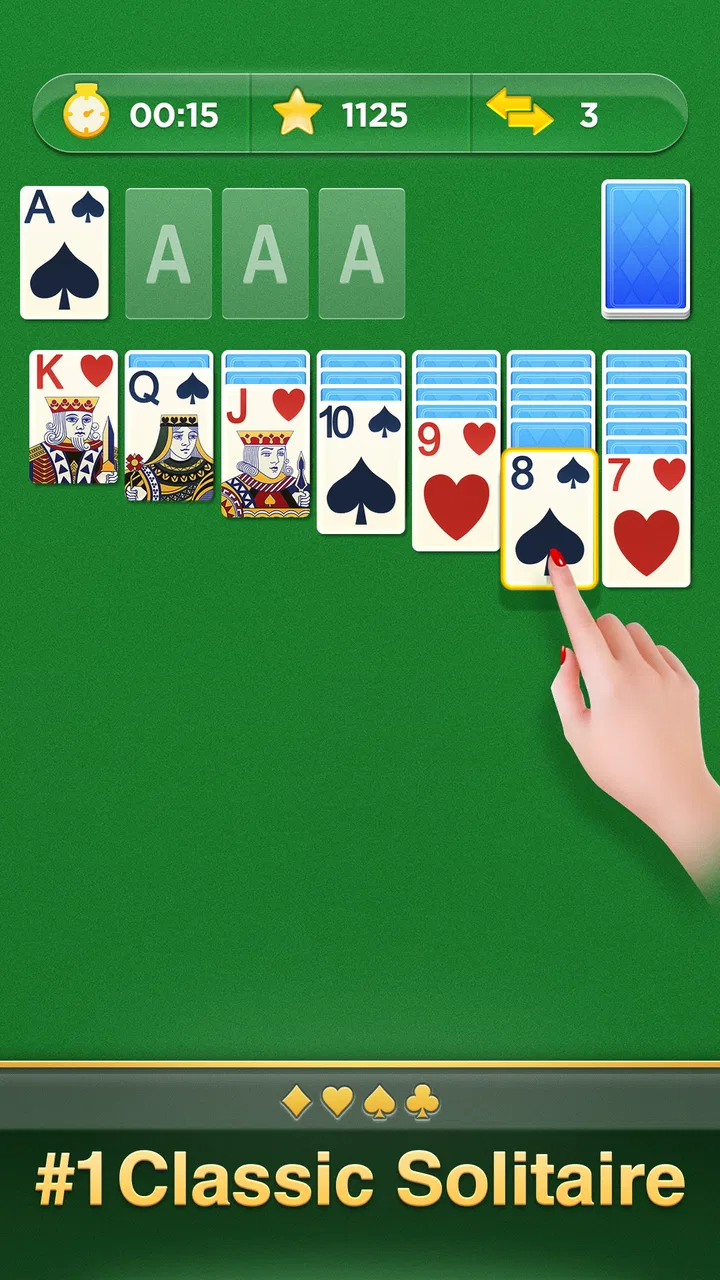
My first impression was that Classic Solitaire does not try to distract me from the central activity. The card layout is the star, and that matters more than it might sound. Solitaire depends on quickly reading suits, ranks, empty spaces, and possible moves. A busy interface would make every turn feel slower, while an overly decorative one could make the game tiring during longer sessions.
Here, the overall mood is closer to a small personal card table than to a loud arcade game. The setting is communicated through the arrangement of the cards and the measured pace of play rather than through a fictional story or an elaborate theme. That gives the game a useful sense of identity: it feels like a digital version of a familiar solitary pastime, not a card game wearing unrelated decoration.
I also appreciate how approachable the format is for someone who has not played recently. The basic objective is immediately recognizable, so I can start without learning a rulebook or building a deck. That makes it particularly suitable for a short waiting period, a quiet evening, or a moment when I want something interactive but mentally manageable.
There is a trade-off in this simplicity. Players who expect a strong opening sequence, a dramatic campaign, or constant visual rewards may find the first few minutes plain. The game’s appeal grows through repetition. It asks me to notice patterns, choose the right order of moves, and accept that some deals require patience. That is a very different kind of engagement from a modern card battler with characters, effects, and progression screens.
For me, the restrained approach works because solitaire already has a clear visual language. The cards provide enough information to create tension: a hidden card may be more valuable than an immediately available move, and an empty column can change the entire shape of the board. The art direction does not need to compete with those decisions. It mainly needs to keep them legible.
Who will feel at home here
I would recommend this version to people who already enjoy classic solitaire, casual players looking for a dependable offline-style pastime, and anyone who prefers a game that can be paused mentally at any point. It is also a good fit for players who do not want to manage a collection, wait for energy, or learn a complicated system before getting to the actual cards.
It is less suitable for someone who wants solitaire to feel like a social activity. There is no reason to choose it if your main interest is competing with friends, building a deck, or discovering a long list of radically different card rules. A more feature-heavy alternative would be better for that audience. Classic Solitaire earns its place by being direct, not by trying to cover every possible interpretation of the genre.
The game is free to download, with optional purchases listed from $0.99 to $9.99 per item. That makes it easy to try without committing money at the start, although players who prefer a completely purchase-free experience should pay attention to how the app presents its optional extras during use. I consider this a reasonable model for a casual title, but the most comfortable experience will depend on how tolerant you are of monetization prompts in free games.
The visual language keeps the mood coherent
The strongest artistic decision is the focus on clarity. In solitaire, visual design is not merely decoration; it is part of the control system. I need to distinguish suits quickly, read ranks without hesitation, and understand which cards are available. A good layout turns those tasks into a natural glance. A poor one makes the game feel like administrative work.
Classic Solitaire’s presentation supports a relaxed mood because it does not make every move feel urgent. The table-like arrangement gives the game a stable rhythm, and the cards create a familiar frame that I can return to without reorienting myself. That consistency is especially useful when I play in short bursts. I can leave after a few moves and come back later without feeling that I have missed a story beat or a timed opportunity.
There is also a subtle connection between the visual order and the mental order of the game. At the beginning of a deal, the tableau can look crowded and uncertain. As I uncover cards and move them into more useful positions, the screen gradually becomes easier to read. The changing arrangement acts almost like visual feedback for my reasoning. I am not only trying to win; I am trying to turn confusion into structure.
That is where the game’s art direction succeeds most clearly. It gives the setting a playable mood without adding unnecessary fiction. The atmosphere comes from concentration, repetition, and the gradual cleaning of the board. For a card game built around solitary attention, that is more appropriate than flashy effects would be.
Small habits that improve the experience
One useful habit is to resist taking the first available move simply because it is legal. I often scan the tableau before acting, looking for moves that reveal a hidden card or create a genuinely useful empty column. A move that looks productive can sometimes block a better sequence later. This is not a special feature; it is a way of reading the layout that makes the game more satisfying and reduces careless losses.
Another practical approach is to treat the stock and waste piles as a planning problem rather than a source of random rescue cards. Before cycling through them, I try to remember which ranks and suits have already appeared. That makes later passes more deliberate. It also gives the game a stronger sense of rhythm: I am not tapping through cards mechanically, but preparing for the moment when a blocked column can finally open.
I also find it helpful to separate “progress” from “movement.” Moving a card does not always improve the position. Sometimes the best turn is the one that preserves flexibility, especially when an empty space could accept a longer sequence later. This distinction is easy to miss in a casual game, but it is one reason the classic format remains interesting after the rules become familiar.
Sound and pacing make it easy to settle into a session
The sound design is most effective when it supports the card actions without trying to dominate them. A solitaire game benefits from a gentle audio relationship between selection, movement, and completion. Those small responses help confirm that an input has registered, while the quiet spaces between actions let me think.
That balance contributes to the game’s overall mood. I can imagine playing with sound enabled when I want the table to feel more tactile, then switching to silent play when I am in a public place or listening to something else. The core experience does not depend on a dramatic soundtrack. Its pacing comes from the decisions themselves, so the game remains comfortable whether I play attentively or use it as a low-pressure background activity.
The tempo is equally important. Classic Solitaire does not force me through a level structure or push me toward rapid reactions. I decide when to inspect the tableau, when to commit to a move, and when to pause. That makes it a good companion for everyday situations where my attention is fragmented. For example, I might begin a deal while waiting for an appointment, make several thoughtful moves, and stop without feeling punished for leaving the game unfinished.
At the same time, the relaxed pacing can reveal the game’s limitation. If I am looking for a strong sense of escalation, the experience may feel flat. A successful move changes the board, but it does not necessarily create the dramatic surge found in a competitive match or a puzzle game with increasingly complex stages. The reward is quieter: a clearer tableau, a well-timed reveal, or the satisfaction of completing a difficult sequence.
I think that restraint is a good match for the setting. The game’s sound and rhythm do not promise excitement that the mechanics cannot deliver. Instead, they reinforce a focused, almost meditative loop. The result is coherent, even if it will not satisfy players who need constant stimulation.
When the pacing works best
The best sessions are the ones where I give myself permission not to rush. I look at the available cards, consider whether a move opens information, and accept that a deal may require several attempts. This approach makes the game feel less like a test of speed and more like a small exercise in sequencing.
There is a useful everyday distinction here. If I have only a minute, the game works as a quick mental reset because I can make one or two moves and stop. If I have a longer break, the same simple structure can hold my attention without demanding the emotional investment of a larger game. Few casual activities manage both ends of that range so naturally.
Players who prefer timers, rankings, or aggressive goals may want a different solitaire app. Those systems can make each deal feel more urgent, but they also change the mood. Classic Solitaire is better for someone who values control over pace and wants the cards to remain the main event.
Where the mechanics fit the atmosphere
The mechanical appeal comes from the tension between visible opportunity and hidden information. I can see enough of the tableau to form a plan, but not enough to guarantee that the plan will work. Every move therefore has two roles: it changes the current arrangement and affects what might become possible next.
That structure fits the calm presentation surprisingly well. The game looks simple, but the best decisions are rarely automatic. I have to judge whether to expose a hidden card, build a descending sequence, reserve an empty column, or move a card toward the foundations. The actions are familiar, yet the order matters. This is the kind of depth that does not need extra systems layered on top.
One of the most useful ways to play is to prioritize information. Revealing a hidden card can be more valuable than immediately advancing a foundation, because the new card may unlock several future moves. I do not follow that rule blindly, but it gives me a strong starting point when the board offers multiple legal choices.
Another trade-off involves empty columns. Creating one can be powerful, especially when it allows a useful king sequence to move into place, but using the space too early may reduce flexibility. I try to think of an empty column as a limited resource rather than an automatic reward. That small change in perspective makes otherwise familiar deals feel more strategic.
The game also rewards remembering the order of cards in the stock. When I cycle through it without a plan, I often lose track of useful options. When I pay attention to what is buried and what will become available after a sequence of moves, the deal feels more like a puzzle I am managing than a series of taps. This is one of the less obvious reasons the classic rules continue to work on a phone.
For new players, the learning curve is gentle because the objective is recognizable. For experienced solitaire players, the challenge comes from improving judgment rather than discovering new rules. That makes the game accessible, but it also means the long-term appeal depends on whether you enjoy refining your play within a familiar framework.
What may create friction
The main friction is repetition. A single classic format can be comforting, but it can also become predictable if I play for long stretches every day. Players who need fresh objectives, unusual layouts, or a sense of account progression may eventually want a broader card collection elsewhere.
Free games can also create a small tension between relaxation and monetization. The optional purchase range is modest enough to keep the initial barrier low, but the presence of in-app purchases means the experience is not necessarily as pure as a paid, one-time solitaire program. If I want a completely minimal interface with no commercial interruptions, a paid alternative may suit me better even if it offers fewer casual conveniences.
Another limitation is emotional rather than technical: losing a deal can feel ambiguous. Sometimes I know I made a poor choice; sometimes the available information simply led me into a dead end. That uncertainty is part of solitaire, but players who prefer transparent puzzle solutions or guaranteed progress may find it frustrating. I enjoy the uncertainty when I am in a patient mood, but I would not open this game when I want a clearly measured challenge.
The current version is 2.13.7, and the game comes from Big Cake Apps. Those details are useful when checking compatibility or identifying the correct title among similar solitaire listings. The minimum operating system is Android 6.0, so it remains accessible to a range of older devices, provided they meet that requirement.
My verdict on the atmosphere and the lasting value
Classic Solitaire succeeds because its visual direction, sound, and pacing all point toward the same destination: a quiet card table where attention matters more than spectacle. The mechanics remain visible at every moment, and the presentation gives them room to breathe. I never feel that the setting is trying to turn a simple deal into something it is not.
That coherence is the game’s real strength. The cards create the world, the measured actions create the rhythm, and the gradual improvement of the tableau creates the sense of movement. It is a small experience, but it understands how to make a small experience feel complete.
I would choose it for a calm commute, a short break between tasks, or an evening when I want to occupy my hands without committing to a complicated game. I would also suggest it to someone returning to solitaire after a long time, because the format is approachable and the decisions become richer as the player learns to protect flexibility.
I would skip it if my priority were multiplayer competition, elaborate progression, a wide range of card variants, or a highly dramatic presentation. In those cases, a more specialized alternative would offer more variety. This game is not trying to replace every other card app, and it is better judged on how well it delivers its focused routine.
For me, the final impression is positive but specific: this is a dependable classic solitaire game, not an expansive card universe. Its free entry, Everyone rating, familiar rules, and calm playable mood make it easy to recommend to casual players. The best reason to install it is the way it turns a few spare minutes into a clear, low-pressure decision-making ritual. If that sounds more appealing than constant novelty, Classic Solitaire is likely to earn a regular place on your phone.
FAQs for Classic Solitaire
01What features does Classic Solitaire offer?
Classic Solitaire provides a traditional card game experience with modern enhancements. It includes customizable themes, daily challenges, and hints to assist players. Additionally, players can track their progress with statistics and choose between draw one or draw three card modes, making it suitable for all skill levels.
02Is Classic Solitaire available offline?
Yes, Classic Solitaire can be played offline, which means you don’t need an internet connection to enjoy the game. This makes it perfect for playing during commutes or in areas with limited connectivity, ensuring that entertainment is always at your fingertips.
03Are there any in-app purchases in Classic Solitaire?
While Classic Solitaire is free to download and play, it may offer in-app purchases for additional themes, card backs, or ad removal. These purchases are optional and are not necessary to enjoy the core gameplay, allowing players to choose their level of investment.
04How does Classic Solitaire ensure user privacy?
Classic Solitaire is committed to protecting user privacy and typically requires minimal permissions. It is important to review the app's privacy policy before downloading to understand how data is collected and used, ensuring a transparent and secure gaming experience.
05Can I customize my gameplay experience in Classic Solitaire?
Yes, Classic Solitaire allows for various customizations to enhance the gaming experience. You can select from different themes, card designs, and backgrounds. This personalization helps create a more engaging and visually appealing environment, tailored to your preferences.
Pros
- Intuitive interface with easy navigation.
- Variety of card designs to choose from.
- Smooth animations enhance the experience.
- Offline play is available
- no internet needed.
- Customizable backgrounds for personalization.
Cons
- Contains ads that can be intrusive.
- No multiplayer mode available.
- Limited hints can frustrate new players.
- Occasional lag on older devices.
- In-app purchases can be pricey.

Classic Solitaire
Gallery